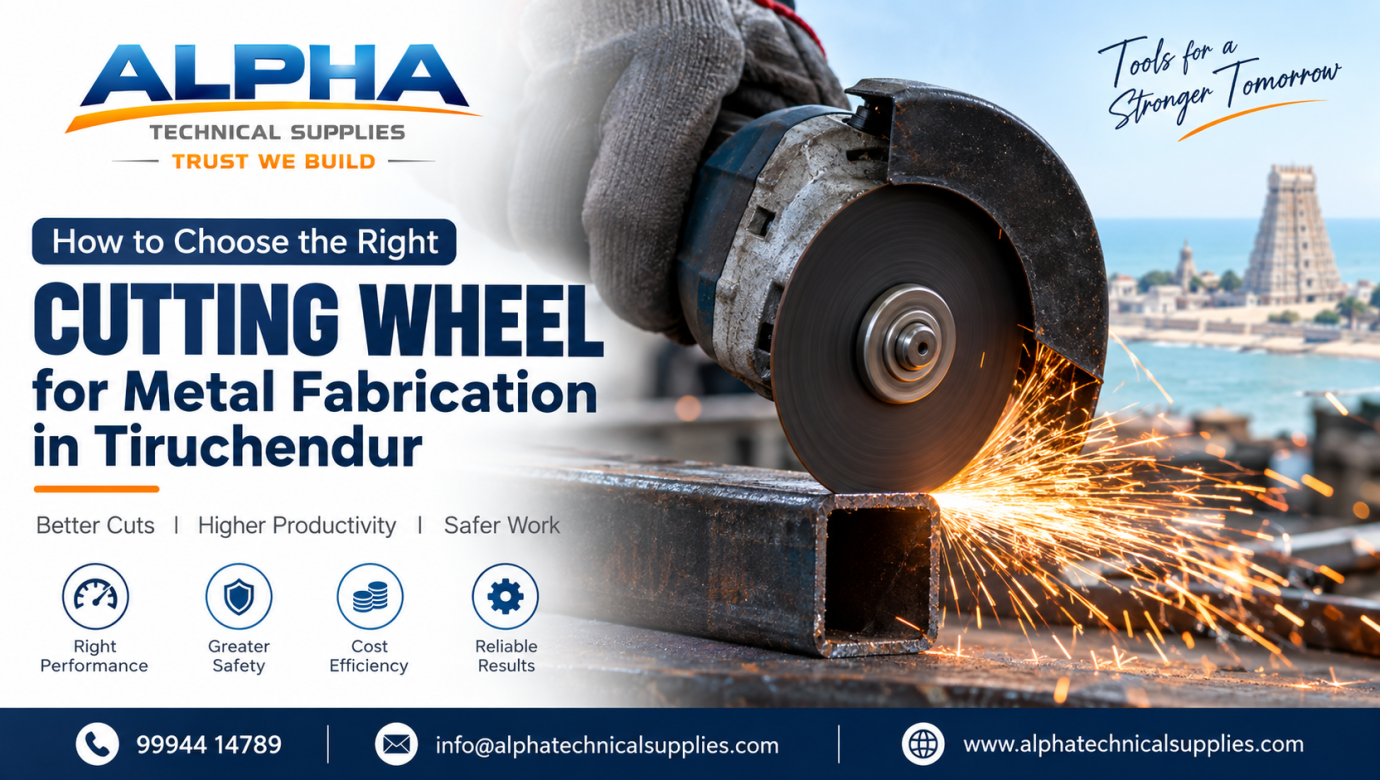
How to Choose the Right Cutting Wheel in Tiruchendur
In metal fabrication, choosing the right cutting wheel can make a major difference in cutting speed, accuracy, safety, and overall operating cost. Whether you are cutting steel pipes, metal sheets, structural components, or carrying out fabrication repairs, the right wheel helps you achieve cleaner cuts while reducing material waste and downtime.
For fabricators looking for a Cutting Wheel in Tiruchendur, consider the material being cut, grinder compatibility, wheel type, thickness, and expected performance rather than simply choosing the lowest-priced option.
What to Consider When Choosing a Cutting Wheel
The right cutting wheel depends mainly on three factors: the material you are cutting, your power tool specifications, and the type of cut you need.
Match the Wheel to the Material
Different metals require different abrasive materials.
For mild steel and carbon steel, aluminum oxide wheels are commonly used for general fabrication because they cut fast and consistently. Zirconia alumina wheels are better suited for demanding applications where longer wheel life and heavy-duty performance are important.
For harder alloys such as titanium or Inconel, ceramic abrasive wheels can cut efficiently and resist glazing better.
When cutting aluminum, copper, brass, and other non-ferrous metals, use a wheel specifically designed for non-ferrous materials. These wheels help reduce loading, where soft metal particles clog the abrasive surface and create excess heat.
Choosing the correct abrasive improves cutting performance and can also extend wheel life.
Type 1 vs. Type 27 Cutting Wheels
Cutting wheels are commonly available in Type 1 flat and Type 27 depressed-center designs.
Type 1 Flat Cutting Wheels
Type 1 flat wheels are ideal for straight 90-degree cuts and provide maximum cutting depth. They are commonly used for pipes, bars, sheets, and other applications where the wheel needs to cut completely through the material.
Type 27 Depressed-Center Cutting Wheels
Type 27 depressed-center wheels have a raised center hub that provides additional clearance between the tool and workpiece. They can be useful for applications such as flush cutting around bolts, nuts, or weld areas. However, they should be used according to the manufacturer's instructions and with the correct guard.
Always ensure that the wheel and guard combination is appropriate for your grinder.
Wheel Thickness and Diameter
Wheel thickness affects cutting speed, precision, durability, and heat generation.
Thin wheels, around 1mm to 1.6mm, are popular for precision fabrication because they remove less material, produce a narrower cut, generate less heat, and generally cut faster. They are particularly useful when a clean cut and minimal material wastage are important.
However, thinner wheels are more sensitive to side pressure and should never be used for lateral grinding.
Thicker wheels generally offer greater durability and stability but may cut more slowly and generate more heat. They can be suitable for heavy-duty or continuous cutting applications.
The wheel diameter must match the grinder. Most importantly, check the RPM rating. The maximum RPM marked on the cutting wheel must be greater than or equal to the grinder's operating RPM.
Don't Choose a Wheel Based Only on Price
The cheapest cutting wheel is not always the most economical option.
Consider the cost per cut rather than only the purchase price. For example, a ₹100 wheel that produces five cuts costs approximately ₹20 per cut. A ₹200 wheel that produces 30 cuts costs only about ₹6.67 per cut.
A longer-lasting wheel can also reduce machine downtime, wheel replacement time, and labor costs. For high-volume fabrication work, investing in a better-performing cutting wheel can therefore improve overall productivity.
Cutting Wheel Safety Tips
Cutting wheels operate at high speeds, so correct handling is essential.
- Use the correct guard: Always use the guard recommended for your wheel and grinder.
- Never use a cutting wheel for grinding: Cutting wheels are designed for cutting, not lateral grinding or weld smoothing.
- Inspect before use: Never use wheels that are cracked, chipped, damaged, or improperly stored.
- Check the expiry date: Resin-bonded wheels can deteriorate over time, particularly when exposed to moisture.
- Avoid excessive pressure: Allow the wheel to cut rather than forcing it through the material.
- Check RPM compatibility: Never use a wheel with a lower maximum RPM rating than your grinder.
Following these basic practices helps reduce the risk of wheel damage and improves cutting performance.
How to Choose a Cutting Wheel Supplier in Tiruchendur
For fabrication workshops, construction teams, maintenance professionals, and industrial users, having access to the right cutting wheels when needed is essential. A reliable supplier should offer quality products suitable for different materials and applications.
Instead of selecting a wheel based only on price, consider abrasive type, wheel thickness, diameter, cutting performance, durability, and cost per cut.
If you are searching for a dependable Cutting Wheel in Tiruchendur, choosing the right supplier can help you avoid unsuitable products, unnecessary wheel changes, and inconsistent cutting results.
Frequently Asked Questions About Cutting Wheels
What cutting wheel is best for mild steel?
For general mild steel fabrication, a 1mm to 1.6mm cutting wheel is often suitable for fast and clean cuts. For thicker sections and heavy-duty applications, a thicker wheel may provide better durability.
Can I use the same wheel for mild steel and stainless steel?
It is better to use a dedicated stainless-steel or INOX cutting wheel for stainless steel. This helps prevent contamination from carbon-steel particles and reduces the risk of discoloration or rust-related issues.
Why does my cutting wheel stop cutting properly?
This can happen because of glazing, incorrect abrasive selection, excessive pressure, overheating, or an improper cutting angle. Using the correct wheel and applying steady, moderate pressure can improve performance.
Why is RPM important for a cutting wheel?
RPM indicates the maximum safe rotational speed of the cutting wheel. The wheel's maximum RPM must be equal to or higher than the grinder's RPM rating. Using an incorrectly rated wheel can create a serious safety risk.
Is a thinner cutting wheel always better?
Not always. Thin wheels provide fast, clean, precise cuts, but thicker wheels can be more suitable for heavy-duty applications where durability and stability are more important.
Get the Right Cutting Wheel for Your Application
The right cutting wheel can help your fabrication work become faster, cleaner, safer, and more cost-effective. Instead of choosing a wheel only because it has a lower price, look at the material, abrasive type, thickness, diameter, RPM rating, and expected wheel life.
For quality cutting wheels and professional industrial tools, Alpha Technical Supplies can help you select the right product for your specific cutting application. Whether you need wheels for mild steel, stainless steel, aluminum, or demanding fabrication work, choosing the right product from a reliable supplier can reduce downtime and improve your overall cutting performance.
Looking for the right Cutting Wheel in Tiruchendur? Contact Alpha Technical Supplies today and choose the cutting wheel that delivers the right balance of performance, durability, safety, and value for your work.
Stay Connected with Alpha Technical Supplies
Looking for reliable power tools, cutting wheels, abrasives, and industrial tools? Follow Alpha Technical Supplies on social media for the latest product updates, useful tips, and industry information.
